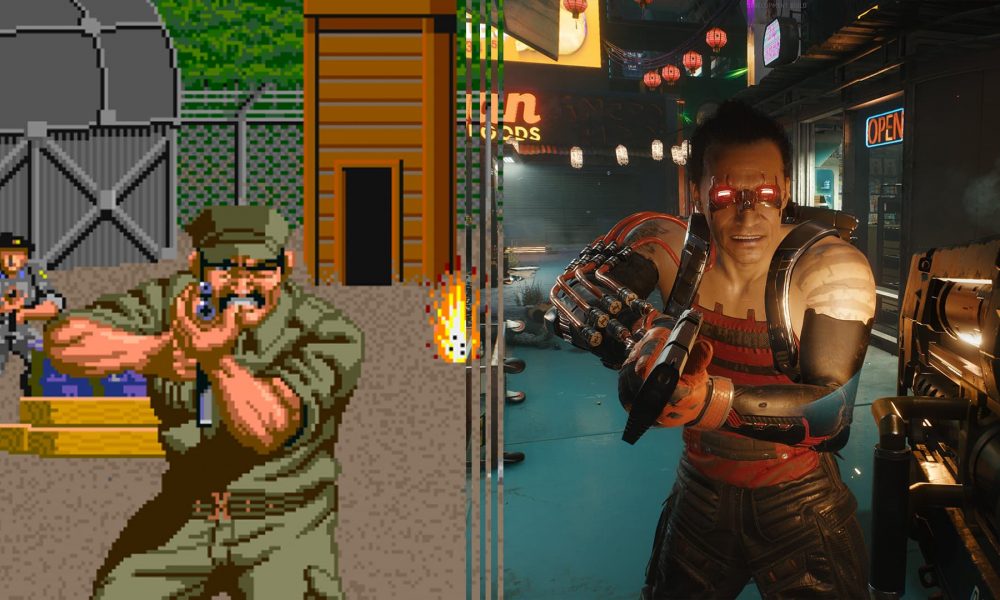
Online hoki123 graphics have come a long way—from blocky pixels and flat colors to cinematic visuals that rival Hollywood films. What began as simple 8-bit experiments has transformed into hyper-realistic digital worlds powered by cutting-edge hardware, advanced engines, and artistic ambition. This evolution isn’t just about better visuals; it has reshaped how players connect, compete, and immerse themselves online.
Pixel Beginnings
The earliest era of online and video games was defined by strict technical limits. Memory was scarce, processors were slow, and screens could display only a handful of colors. Yet those limitations sparked creativity. Games like entity[“video_game”,”Pong”,”1972 arcade game”] and early arcade titles relied on clean, readable visuals that focused entirely on gameplay.
Characters were built from a few pixels, animations were minimal, and imagination filled the gaps. Despite their simplicity, these games laid the foundation for everything that followed. Clear visual language became essential, especially as multiplayer experiences began to emerge.
The 8-Bit Era
The rise of home consoles introduced the iconic 8-bit style. Games became more colorful, characters gained personality, and worlds felt more alive. Titles like entity[“video_game”,”Super Mario Bros.”,”1985 platformer”] showed how expressive graphics could be, even with technical constraints.
For early online and shared gaming experiences, this era mattered because visuals needed to be instantly recognizable. Players had to understand characters, enemies, and environments at a glance. The charm of 8-bit graphics still influences modern indie and online games today.
16-Bit Growth
The move to 16-bit graphics marked a major leap forward. Sprites became smoother, animations more detailed, and environments richer. Games started to feel more dynamic, with layered backgrounds and improved lighting effects.
This era helped normalize longer play sessions and deeper engagement—crucial for early online competition and co-op play. Visual clarity improved, making it easier for players to track fast action and complex interactions on screen.
Early 3D Shift
The transition from 2D to 3D completely redefined game graphics. Polygons replaced sprites, and flat worlds turned into explorable spaces. While early 3D models were rough and angular, they introduced depth, perspective, and camera control.
Online games benefited enormously from this shift. Players could now navigate shared 3D spaces, recognize opponents from multiple angles, and experience a stronger sense of presence. This era laid the groundwork for modern online shooters and multiplayer RPGs.
Internet Changes
As internet speeds improved, online gaming graphics evolved alongside connectivity. Developers no longer had to design visuals solely around offline play. Environments became larger, animations more complex, and character customization more detailed.
Persistent online worlds emerged, where graphics needed to support thousands of players simultaneously. Optimization became just as important as visual quality, pushing developers to balance beauty with performance.
Realism Takes Hold
By the mid-2000s, realism became a major goal. Games like entity[“video_game”,”Crysis”,”2007 pc shooter”] set new standards with advanced lighting, realistic textures, and physics-based effects. Water reflected light accurately, foliage reacted to movement, and characters looked more human than ever.
For online gaming, realism raised immersion to a new level. Competitive players could read subtle animations, environmental details mattered tactically, and spectatorship became more engaging thanks to cinematic visuals.
Engine Evolution
Modern graphics owe much of their power to advanced game engines. Engines like Unreal and Unity introduced real-time lighting, complex shaders, and scalable assets. These tools allowed developers to create stunning online worlds without building everything from scratch.
This engine-driven evolution democratized high-quality graphics. Indie developers could now deliver visually impressive online games, while AAA studios pushed boundaries even further with massive budgets and teams.
Art Over Realism
Interestingly, not all progress moved toward realism. Many online games chose stylized visuals for clarity, performance, and identity. Clean art styles age better, run smoothly on more devices, and stand out in crowded markets.
This approach proved especially effective for competitive online games, where readability and frame rate matter more than ultra-realistic textures. Style became a strategic design choice, not a technical compromise.
Competitive Clarity
In online multiplayer games, graphics must serve gameplay. Visual effects need to communicate information instantly—enemy positions, abilities, damage, and movement. Modern graphics design emphasizes clarity alongside beauty.
Developers carefully balance detail and simplicity so players can react quickly. This philosophy has shaped esports-ready visuals, where smooth performance and visual consistency are essential.
Ray Tracing Era
Ray tracing marked another turning point. By simulating how light behaves in the real world, it brought lifelike reflections, shadows, and global illumination to online games. Scenes now respond dynamically to lighting changes, making environments feel grounded and realistic.
While demanding on hardware, ray tracing represents the direction of future online game graphics—where realism and real-time performance coexist.
AI Enhancements
Artificial intelligence is now influencing graphics directly. AI upscaling, texture generation, and animation smoothing allow games to look better without massive performance costs. Online games benefit especially, as these techniques help maintain high frame rates across diverse systems.
AI also enables more natural character animations and facial expressions, deepening emotional connection in multiplayer and story-driven online experiences.
Virtual Immersion
Virtual reality and augmented reality are redefining what “graphics” mean. In VR online games, visuals must account for depth perception, motion comfort, and realism at close range. This pushes graphical fidelity and optimization to new extremes.
As hardware improves, online worlds will feel less like games and more like places—shared spaces where visuals fully support presence and interaction.
Mobile Breakthroughs
Mobile online games have driven a parallel graphics evolution. Limited hardware forced developers to innovate with efficient rendering, stylized visuals, and clever optimization. Today’s mobile games rival older console titles in visual quality.
This progress has expanded online gaming’s reach, proving that great graphics aren’t limited to high-end PCs or consoles.
The Road Ahead
The future of online game graphics points toward deeper immersion, smarter rendering, and greater accessibility. Photorealism will continue to improve, but so will artistic experimentation. Cloud gaming may soon offload graphical processing entirely, allowing stunning visuals on almost any device.
Graphics will also become more adaptive—adjusting in real time to player hardware, network conditions, and personal preferences.
Final Thoughts
The evolution of online slot depo 1k graphics from 8-bit simplicity to hyper-realistic worlds is a story of technology, creativity, and player expectation. Each generation built on the last, transforming pixels into living worlds where millions connect every day.
What matters most is not just how real games look, but how effectively graphics enhance experience, emotion, and interaction. As online gaming continues to grow, visuals will remain a powerful force—shaping not only how games look, but how they feel, play, and bring people together across the globe.